
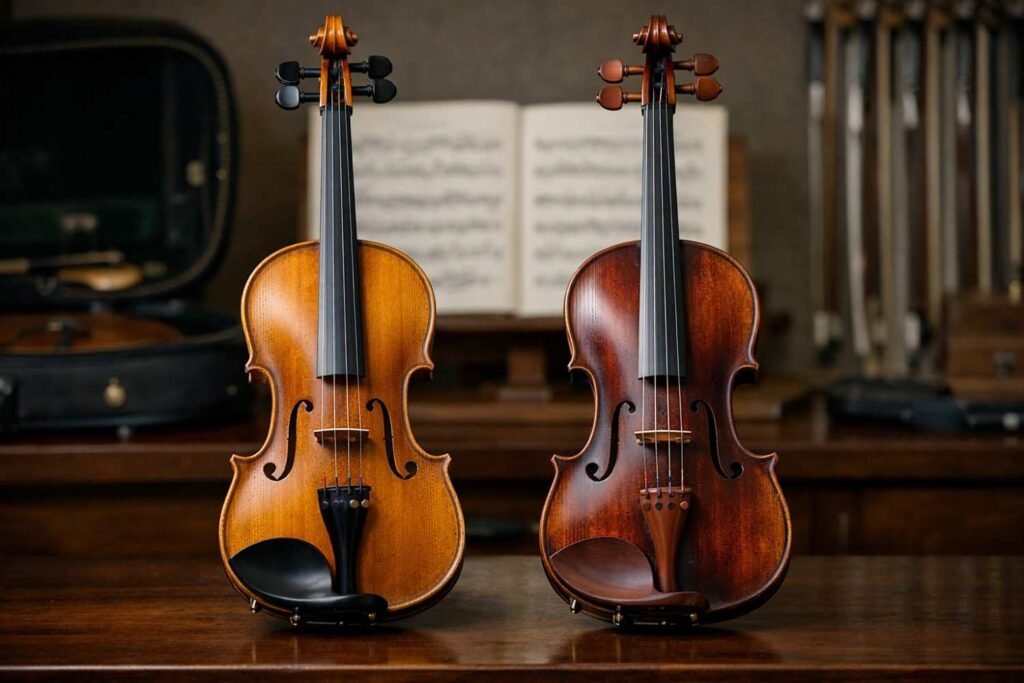
Customers who compare violins at the same level of prices would generally expect the products to be of nearly equal quality, but they may actually experience totally different results. This isn’t a pricing error—it reflects how price at any given tier reflects a combination of factors that don’t always move together, meaning two instruments can arrive at the same number through very different combinations of materials, craftsmanship, and setup quality.
Case Comparison: Two Instruments at the Same Price Tier
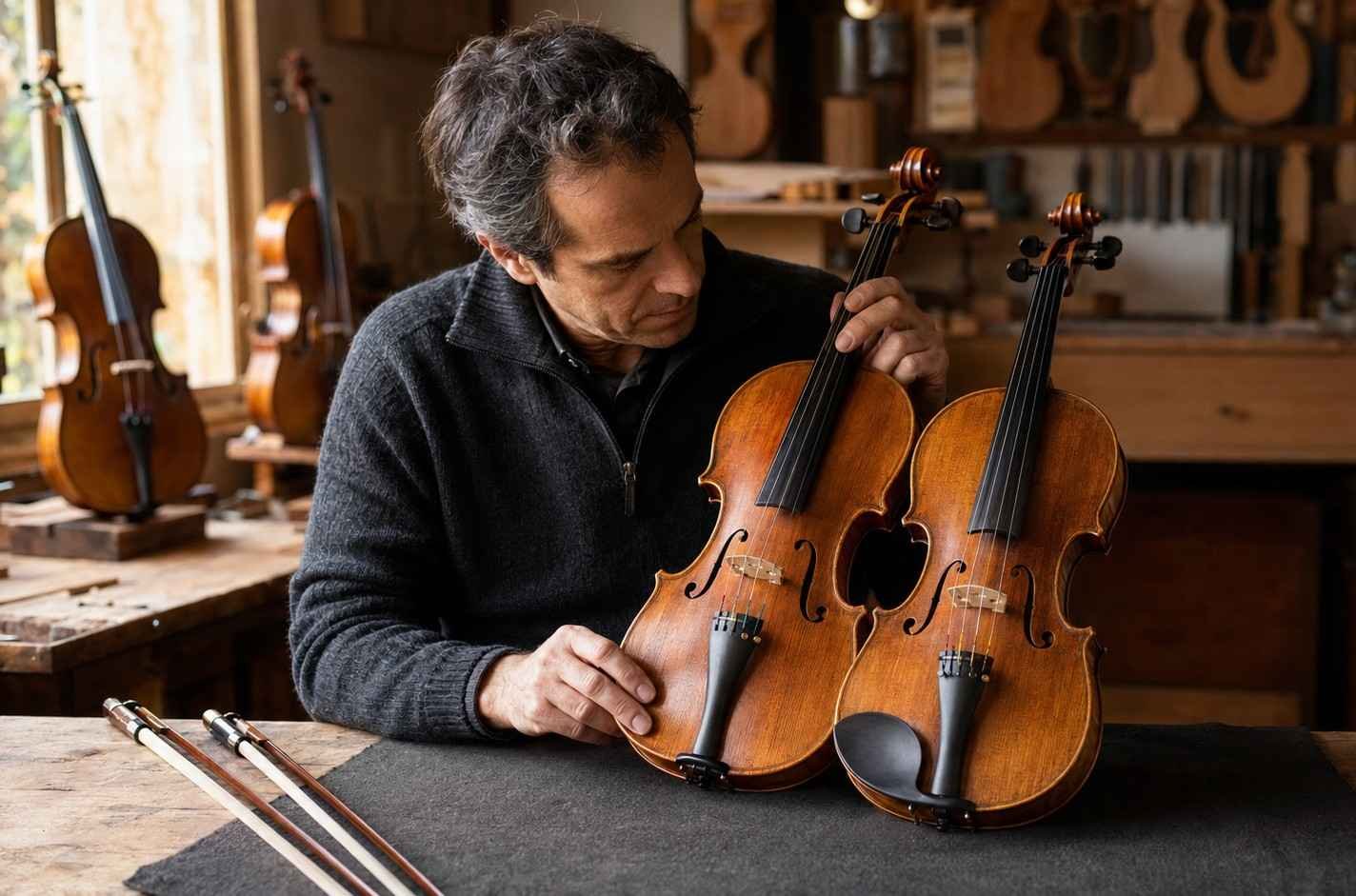
Consider two intermediate-level violins priced identically. On paper, both list similar wood types and comparable specifications. For buyers comparing options from Antonio Strad Violin, understanding how setup, craftsmanship, and finishing influence performance makes it easier to recognize why similarly priced instruments can deliver very different playing experiences. In practice, examining each more closely reveals meaningful differences.
Instrument A:
- Higher-quality tonewood, but factory setup with minimal individual adjustment
- Consistent, durable construction suited to regular student use
- Setup adjustments (bridge, sound post) done to standard specifications rather than customised
Instrument B:
- Comparable tonewood quality, but individually set up by a luthier
- Bridge and sound post adjusted specifically for that instrument’s characteristics
- More time invested in fine-tuning playability and tonal balance before sale
The difference in final sound and playability between these two instruments often has less to do with raw material cost and more to do with how much individual attention went into the finishing and setup process.
Where the Price Actually Goes
Understanding what a given price point is paying for helps explain why identical price tags don’t guarantee identical instruments.
| Cost Factor | Variable Impact on Final Instrument |
| Wood quality | Affects tonal potential, but only realised with proper setup |
| Construction precision | Affects consistency and long-term stability |
| Individual setup and adjustment | Often the most variable factor at a given price point |
| Brand reputation and sourcing | Can affect price without proportionally affecting sound quality |
Two manufacturers might allocate their production budget very differently — one prioritising slightly better wood with minimal individual setup, another using comparable wood but investing more heavily in per-instrument adjustment. Both approaches can land at the same retail price while producing meaningfully different playing experiences.
Why Setup Quality Is Often the Deciding Factor
Among the variables that differ at a given price tier, setup quality tends to have an outsized effect on how an instrument actually sounds and feels to play, since even excellent tonewood can underperform without proper bridge fitting, sound post placement, and string height adjustment.
This is one of the reasons shoppers comparing violins benefit from looking beyond the listed price and specifications alone, and asking specifically about the setup process behind a given instrument.
Retailers that describe their setup and adjustment process in detail—rather than listing only wood type and general specifications—tend to give shoppers a clearer picture of what’s actually driving quality at a given price point, since two instruments with nearly identical spec sheets can play very differently depending on how much individual attention went into fitting and adjusting the instrument before sale.
What to Ask When Comparing Options at the Same Price
Given how much setup and finishing work can vary even among similarly priced instruments, a few specific questions tend to be more useful than comparing spec sheets alone:
- Is the instrument set up individually or adjusted to standard factory specifications?
- Do the case, bow, strings, and setup come as part of the package, or do they have to be purchased separately?
- Is there an option to return or exchange the instrument if it does not function correctly when used?
- Could the store explain what makes the instrument unique compared to other instruments offered at a similar price?
By asking such questions, shoppers would be making wiser decisions when comparing similar instruments based on their price point.
Comparing Sources, Not Just Instruments
Since setup and individual attention vary so much even within a single price tier, the retailer or source behind an instrument matters nearly as much as the instrument’s listed specifications.
Sources such as Antonio Strad Violin that provide detailed information about their setup process and are willing to answer specific questions about an individual instrument’s construction and adjustment tend to offer more reliable value at a given price point than sources providing only basic specifications without further detail.
The Bigger Takeaway
Price alone is an unreliable indicator of how a violin will actually sound or play, since it reflects a combination of factors that manufacturers and retailers can balance in very different ways.
Shoppers who understand this — and who ask pointed questions about setup, sourcing, and individual attention rather than relying on price and spec sheets alone — are better positioned to find an instrument that genuinely matches their needs, rather than one that simply matches their budget on paper.