

When I first ran ads, I focused on one thing—getting traffic. And it worked. Clicks increased, impressions grew, and campaigns looked successful.
But conversions? Not so much. That’s when I realized the missing piece—a proper ppc funnel optimization strategy. I was sending users directly to offers without guiding them through a journey.
Once I built a structured funnel, everything changed. Conversions improved, costs dropped, and campaigns became more predictable.
If you want better results from your ads, you need to optimize your funnel, not just your campaigns.
Key Takeaways
- PPC success depends on the entire funnel, not just ads
- Different users need different messaging at each stage
- Funnel optimization improves conversion rates without increasing traffic
- Tracking user behavior is essential for optimization
- Small improvements across the funnel create major results
What Is a PPC Funnel (Simple Explanation)
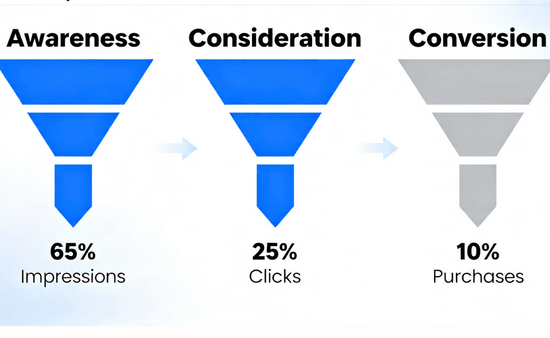
A PPC funnel represents the journey a user takes from clicking your ad to becoming a customer.
It typically has three stages:
- Awareness (user discovers your solution)
- Consideration (user evaluates options)
- Conversion (user takes action)
Most beginners focus only on the final step. That’s why campaigns struggle.
Why Funnel Optimization Matters More Than Traffic
More traffic does not guarantee better results. If your funnel is weak, increasing traffic only increases wasted spend. When I optimized my funnel, I noticed:
- Higher conversion rates
- Lower cost per acquisition
- Better overall campaign performance
Improving the funnel makes every click more valuable.
Step 1: Align Your Funnel with User Intent
Every user is at a different stage.
I make sure my funnel matches their intent:
- Awareness stage → educational content
- Consideration stage → comparisons and benefits
- Conversion stage → strong offers and CTAs
This alignment improves engagement and conversions.
Step 2: Optimize Your Landing Pages for Each Stage
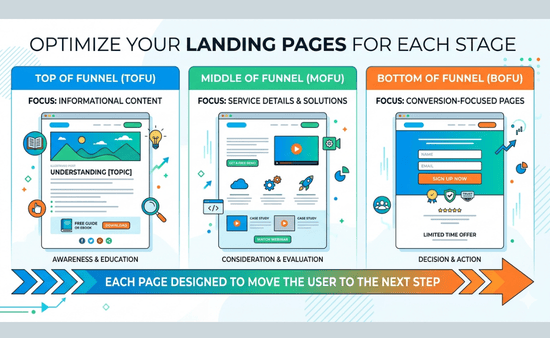
One landing page cannot serve every user. I create different pages based on funnel stages.
For example:
- Top of funnel → informational content
- Middle of funnel → service details
- Bottom of funnel → conversion-focused pages
Each page is designed to move the user to the next step.
Step 3: Use Targeted Keywords for Each Funnel Stage
Keyword strategy should match the funnel. I use:
- Informational keywords for awareness
- Commercial keywords for consideration
- Transactional keywords for conversion
If you want to refine this, start with: how to find ppc keywords
Better keyword targeting improves funnel performance.
Step 4: Implement Remarketing Across the Funnel
Most users don’t convert on the first visit. That’s why remarketing is essential. I use:
- Ads for users who visited but didn’t convert
- Follow-up offers
- Reminder campaigns
To understand this better, explore: remarketing strategies for ppc
Remarketing keeps users engaged throughout the funnel.
Step 5: Track User Behavior Across the Funnel
Tracking helps identify where users drop off.
I monitor:
- Page views
- Time on site
- Conversion paths
If tracking is not set up, start here: ppc conversion tracking setup guide
Data shows exactly where improvements are needed.
Step 6: Improve Conversion Rate at Each Stage
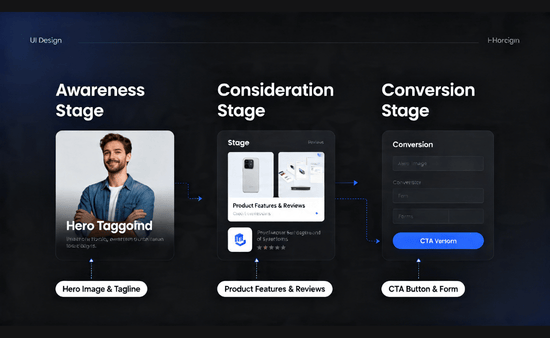
Instead of focusing only on the final conversion, I optimize every step.
I improve:
- Ad relevance
- Landing page clarity
- Calls to action
Even small improvements at each stage increase overall conversions.
Step 7: Reduce Drop-Off Points
Every funnel has drop-off points. My goal is to minimize them. I do this by:
- Simplifying navigation
- Reducing form fields
- Improving page speed
- Making offers clearer
A smoother experience keeps users moving forward.
Step 8: Use Data to Optimize Continuously
Funnel optimization is not a one-time task.
I regularly:
- Analyze performance data
- Test different strategies
- Adjust based on results
If you want to understand performance better, refer to: google ads analytics for beginners
Continuous optimization leads to better results over time.
Common Mistakes in PPC Funnel Optimization
I’ve made these mistakes before:
- Sending all traffic to one page
- Ignoring user intent
- Not using remarketing
- Skipping tracking
- Overcomplicating the funnel
Avoiding these mistakes improves performance significantly.
How Long Does It Take to Optimize a PPC Funnel?
From my experience:
- Initial setup: a few days
- Early improvements: 2–3 weeks
- Strong optimization: 1–2 months
Funnel performance improves with consistent effort.
What Actually Makes a PPC Funnel Work
Here’s what I learned:
A successful funnel is not about complexity.
It’s about clarity and alignment.
- Clear messaging
- Relevant targeting
- Smooth user experience
When everything works together, conversions increase naturally.
Frequently Asked Questions
1. What is the most important stage in a PPC funnel?
The conversion stage is critical, but all stages matter. A weak awareness or consideration stage can reduce conversions significantly.
2. How do I know if my funnel is working?
Track conversion rates and user behavior. If users drop off before converting, your funnel needs optimization.
3. Can funnel optimization reduce PPC costs?
Yes, improving conversion rates reduces cost per acquisition and improves overall efficiency.
4. Do I need multiple landing pages for my funnel?
Yes, using different pages for different stages improves relevance and increases conversions.
A Smarter Way to Turn PPC Traffic into Results
Building a ppc funnel optimization strategy changed how I approach advertising.
I stopped focusing only on traffic and started focusing on the journey. That shift improved my results significantly.
If you align your funnel with user intent, optimize each stage, and use data to improve continuously, you won’t just run campaigns.
You’ll build a system that consistently converts traffic into real results.