I still remember how confusing digital marketing felt at the beginning. There were too many terms: SEO, ads, analytics, and everyone seemed to be doing everything at once. It felt like you had to learn everything before even starting, which honestly just slowed things down.
But the reality is simpler. You don’t need a degree, and you don’t need to master everything on day one. Digital marketing is one of those rare career paths where skills, results, and proof matter more than formal education. Once I understood that, things started to click, and that’s exactly what most beginners miss.
Understanding What Digital Marketing Really Involves

Before jumping in, it helps to see digital marketing not as one skill but as a collection of different areas. Each one works differently, and most professionals eventually specialize in one before expanding.
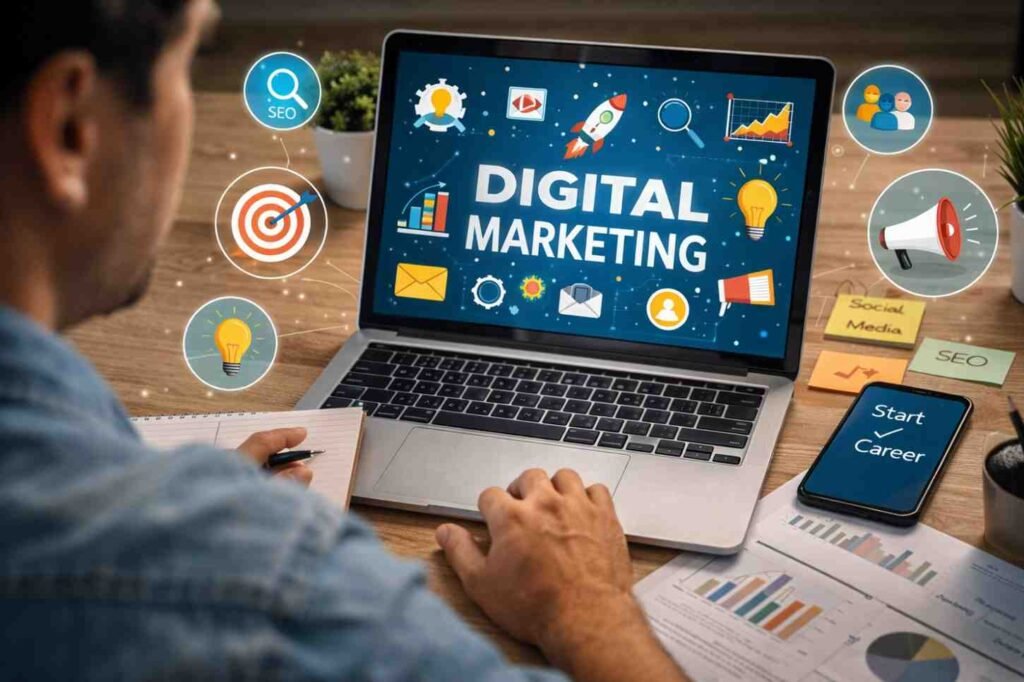
At its core, digital marketing includes:
- Search engine optimization (SEO)
- Social media marketing
- Content creation and copywriting
- Paid advertising (PPC)
- Email marketing
- Analytics and performance tracking
You don’t need to master all of these at once. In fact, trying to do that is one of the biggest mistakes beginners make.
Start With One Core Skill First

The smartest way to start digital marketing is to pick one area and go deep. Once you understand how one channel works, learning others becomes easier.
Here’s how most beginners approach it:
SEO (Search Engine Optimization)
This is about helping websites rank higher on search engines. It involves keyword research, on-page optimization, and understanding how search algorithms work. It’s slow but powerful.
Social Media Marketing
This focuses on growing and managing accounts on platforms like Instagram or LinkedIn. It’s more creative and fast-moving, especially if you enjoy content trends.
Content Marketing & Copywriting
If you enjoy writing or storytelling, this is a strong entry point. It includes blogs, ad copy, landing pages, and email campaigns.
Paid Advertising (PPC)
This involves running ads on platforms like Google Ads or Meta. It’s more data-driven and requires budget management.
Analytics
Every marketing decision is backed by data. Tools like Google Analytics help you understand what’s working and what’s not.
Instead of jumping between all of these, pick one based on your interest and spend a few weeks building a real understanding.
Build Skills That Actually Matter

Digital marketing is performance-based. Knowing theory is not enough; you need to show results.
Some core skills that consistently matter:
- Keyword research and audience understanding
- Writing clear, engaging content
- Basic design sense (even with simple tools)
- Data interpretation and decision-making
- Understanding how platforms work (not just using them)
Most employers and clients care less about where you learned and more about what you can do.
Get Certifications That Add Real Value

Certifications won’t make you an expert overnight, but they help you stand out, especially when you’re starting with no experience.
Some widely recognized options include:
- Google Digital Marketing & E-commerce certification
- HubSpot certifications (content, email, inbound)
- Meta Blueprint for social media ads
These are practical and beginner-friendly. More importantly, they give you structure when you’re unsure what to learn next.
Create Your Own Experience From Scratch
This is where most people hesitate. They wait for a job before gaining experience, but in digital marketing, it works the other way around.
You create experience first.
Here are simple ways to do that:
- Start a blog or website and apply SEO basics
- Create a niche social media page and grow it
- Write sample content or case studies
- Help a small business or local brand for free
The goal is not perfection. It’s proof.
When you can show traffic growth, engagement numbers, WordPress setup, or campaign results, even small ones, you instantly stand out.
Build A Portfolio That Shows Results

A strong portfolio is what turns learning into a career.
Instead of just listing skills, show:
- What you worked on
- What strategy did you use
- What results did you achieve
Even if your numbers are small, they matter. Growth from 0 to 500 followers or improving website traffic is still real, measurable progress.
This is often the difference between someone who knows digital marketing and someone who actually gets hired.
Move Into Real Work Opportunities
Once you have basic skills and a small portfolio, you’re ready to step into the industry.
There are three common paths:
Internships
These are great for structured learning and a real team experience. Many beginners start here and transition into full-time roles.
Freelancing
Platforms like Upwork or Fiverr allow you to take on small projects. It builds confidence and exposes you to real client expectations.
Entry-Level Roles
Common starting roles include:
- SEO Analyst
- Social Media Executive
- Content Marketing Assistant
These roles focus on execution, which is exactly what you need in the early stage.
FAQs: How To Start Digital Marketing And Turn It Into A Career
1. What is the best way to start digital marketing for beginners?
Start by choosing one area, like SEO or social media marketing. Focus on learning and practicing that skill instead of trying to learn everything at once.
2. Do I need a degree to start digital marketing?
No, a degree is not required. Most employers value skills, certifications, and real-world results more than formal education.
3. How long does it take to become a digital marketer?
It depends on your consistency, but most people can build basic skills and a portfolio within 3 to 6 months.
4. Can I start digital marketing with no experience?
Yes. You can create your own experience by starting a blog, managing social media pages, or working on small projects.
Final Thoughts
Starting digital marketing feels overwhelming at first because there’s no single path. But that’s also what makes it flexible. You don’t need permission to begin. You don’t need years of study. What matters is picking one direction, practicing consistently, and building proof along the way. Once you start seeing small results, everything becomes more structured and less confusing.
Stick with it, even when progress feels slow. That’s usually the phase where most people quit and where real growth actually begins.